


The Acid Reflux Myth: Why Low Stomach Acid Is the Real Problem
Heartburn reaching for an antacid is the natural response — but what if the burning isn't from too much stomach acid, but too little? Low stomach acid, known as hypochlorhydria, is one of the most misunderstood digestive conditions today. In this post, we break down the real mechanism behind acid reflux, what happens in your body when HCL is low, and the gentle, natural steps you can take to start correcting it.
If you've ever reached for an antacid after a meal, you've been told the same story most people have: your stomach is making too much acid, and you need to neutralize it. It's a story backed by billions of dollars in pharmaceutical advertising and a medicine cabinet full of pills.
But what if that story has it backwards? What if the heartburn, the bloating, the discomfort after meals isn't coming from too much stomach acid but from too little?
This is one of the most important and misunderstood conversations happening in functional and integrative health right now. And if you've been struggling with chronic digestive issues that don't seem to get better no matter what you do, understanding the role of hydrochloric acid (HCL) in your digestion might be the missing piece you've been looking for.
What Is Stomach Acid and Why Does It Matter?
Your stomach produces hydrochloric acid (HCL) as a core part of the digestive process. When functioning optimally, your stomach maintains a pH of around 1.5 to 3 — highly acidic by design, and for very good reason.
HCL plays a critical role in your overall health and wellbeing, including:
Breaking down protein so your body can absorb amino acids
Activating pepsin, the enzyme responsible for protein digestion
Enabling absorption of vital nutrients including vitamin B12, iron, calcium, magnesium, and zinc
Triggering the release of bile and pancreatic digestive enzymes downstream
Serving as a first-line defense against harmful bacteria, parasites, and pathogens in your food
Signaling the lower esophageal sphincter (LES) to stay tightly closed
When HCL levels drop, this entire cascade begins to break down. And the consequences ripple far beyond your stomach.
The Misconception: More Acid Is the Problem
Here is where the mainstream understanding goes wrong. When someone experiences heartburn or acid reflux, the conventional assumption is that excess stomach acid is splashing up into the esophagus. The solution? Neutralize or suppress the acid with antacids, H2 blockers, or proton pump inhibitors (PPIs) like Prilosec, Nexium, or Prevacid. And for a while, symptoms often do improve. The burning sensation goes away, and the patient feels better ; temporarily. But this approach is addressing the symptom, not the cause. And for a significant number of people, suppressing stomach acid is actually making the underlying problem worse.
As Dr. Jonathan Wright, M.D., author of Why Stomach Acid Is Good For You, has argued, the root cause of heartburn, indigestion, and GERD for many people is not excess stomach acid — it is insufficient stomach acid. Dr. Wright estimates that as many as 90% of people over 40 with GERD are actually suffering from low stomach acid, not high.
The Mechanism: How Low HCL Causes Acid Reflux
Step 1: Acid drops, digestion slows. When stomach acid is low, food is not broken down efficiently. Proteins sit in the stomach longer than they should, partially digested and fermenting rather than moving through properly.
Step 2: Fermentation creates gas and pressure. Undigested food, particularly carbohydrates, begins to ferment in the stomach and small intestine. This fermentation produces gas, which increases intra-abdominal pressure — pressure that pushes upward.
Step 3: The LES is weakened. Under normal conditions, the acidic pH of the stomach signals the lower esophageal sphincter (LES) to stay firmly closed. The LES is the muscular valve that separates your stomach from your esophagus, and it relies on adequate stomach acid to maintain its tone. When acid levels are chronically low, that signal is weakened, and the LES can become lax and open when it shouldn't.
Step 4: Whatever acid remains refluxes upward. When that gas pressure builds and the LES relaxes, stomach contents — including even small amounts of weakened acid — are pushed back up into the esophagus. The esophageal lining is not designed to handle any acid, which is why even a low-acid reflux episode creates that familiar, painful burning sensation.
The irony: the burning feels like too much acid. But the mechanism driving it is often too little.
What Can Low Stomach Acid Lead To?
Left unaddressed, chronically low HCL sets off a chain reaction that extends well beyond heartburn.
Nutrient deficiencies. Without adequate HCL, your body cannot properly absorb vitamin B12, iron, calcium, magnesium, or zinc — no matter how well you eat. This can lead to fatigue, anemia, bone loss, and neurological symptoms over time.
Poor protein digestion. If proteins aren't being broken down into their amino acid building blocks, the body can't build neurotransmitters, repair tissue, support immune function, or maintain muscle mass effectively.
SIBO (Small Intestinal Bacterial Overgrowth). Stomach acid is one of the body's primary defenses against bacteria migrating where they don't belong. When acid is low, bacteria that should stay in the large intestine can travel upward into the small intestine and colonize there — contributing to significant bloating, gas, irregular bowel movements, and nutrient malabsorption.
H. pylori infection. Low stomach acid creates an environment where H. pylori, the bacteria associated with gastric ulcers and chronic gastritis, can survive and thrive. Notably, H. pylori infection itself further suppresses stomach acid, creating a self-reinforcing cycle.
Skin issues. Poor protein digestion and nutrient deficiencies associated with low HCL have been linked to skin conditions including acne, rosacea, and eczema.
Immune vulnerability. With stomach acid reduced as a first-line barrier, the body becomes more susceptible to foodborne pathogens, parasites, and gut infections.
Long-term PPI use compounds the problem. When acid-suppressing medications are taken long term, they further drive down already low HCL levels, deepening nutrient deficiencies and increasing risk of SIBO — the very symptoms the medication was meant to relieve.
Common Signs You May Have Low Stomach Acid
Low stomach acid (hypochlorhydria) is often overlooked because its symptoms can easily be mistaken for other conditions. Signs to pay attention to include:
Bloating, belching, or gas shortly after eating
Heartburn or acid reflux (especially after protein-heavy meals)
Feeling excessively full after small meals
Undigested food visible in stool
Chronic fatigue or low energy
Iron deficiency anemia that doesn't respond well to supplementation
Brittle nails, hair thinning, or hair loss
Frequent nausea
History of H. pylori infection
Long-term use of antacids or PPIs
How to Start Correcting Low Stomach Acid
The goal with supporting HCL isn't to override your body's systems — it's to work with them. Here are some gentle, foundational steps to begin:
Slow down and eat mindfully. Digestion begins in the brain, not the stomach. The sight, smell, and anticipation of food triggers the release of digestive juices. Eating in a relaxed, parasympathetic state (rather than rushing through meals while stressed) is one of the most important things you can do to support healthy HCL production.
Chew thoroughly. Chewing breaks food into smaller pieces and signals the stomach to begin producing acid. Most of us chew far less than we should. Aim to chew each bite until food is nearly liquid before swallowing.
Try apple cider vinegar or lemon juice before meals. A tablespoon of raw, unfiltered apple cider vinegar in a small amount of water, or fresh lemon juice in water, taken 10 to 15 minutes before eating can help gently prime your stomach for digestion and lower gastric pH in preparation for the meal.
Incorporate digestive bitters. Bitter herbs including gentian root, dandelion, artichoke leaf, and wormwood work by stimulating taste receptors that trigger the body's digestive reflexes — including HCL production and enzyme secretion. Bitters are one of the gentlest and most herbalist-friendly tools for digestive support. Starting a meal with bitter greens like arugula, radicchio, or dandelion leaf is a simple food-first approach.
Support your zinc levels. Zinc is a necessary cofactor in HCL production. Many people are deficient. Food sources including pumpkin seeds, red meat, oysters, legumes, and nuts all support zinc intake.
Eat protein first. Amino acids in protein are among the strongest triggers for stomach acid secretion. Starting your meal with a protein food before moving to starches and vegetables may help optimize HCL output.
Avoid drinking large amounts of water with meals. Drinking significant amounts of water during a meal can dilute gastric juices, impairing digestion. Sipping small amounts is fine, but save your water intake for between meals.
Consider Betaine HCL with pepsin. For those working with a practitioner, Betaine HCL is a supplemental form of hydrochloric acid that can be taken before protein-rich meals to support digestion. This is not a first step to take independently — it is best introduced with practitioner guidance, particularly because dosing requires careful titration. (Note: Betaine HCL is not appropriate if you have gastritis, active ulcers, or are currently taking anti-inflammatory medications.)
Address the stress piece. The body cannot produce stomach acid in a fight-or-flight state. Chronic stress directly suppresses HCL production. Nervous system support — whether through breathwork, rest, adaptogenic herbs, or mindfulness practices — is a genuine and underappreciated part of digestive health.
A Note on Testing
If you suspect low stomach acid is playing a role in your symptoms, there are ways to explore this further. A simple at-home baking soda test (drinking a solution of baking soda in water on an empty stomach and observing burp timing) can offer a rough first indicator, though it is not diagnostic. Your doctor may suggest a more accurate assessment, such as a Heidelberg test (measuring gastric pH with a swallowed capsule). An accurate assessment can be doner through comprehensive stool and functional lab testing with a practitioner. This is something we can explore within a Rooted Functional Assessment, where we look at the full digestive and nutritional picture together.
The conversation around acid reflux has been shaped largely by pharmaceutical interests, and the default solution — suppress the acid — may be giving temporary comfort while deepening the root cause for many people. If this resonates with you, know that you are not imagining your symptoms, and you are not out of options. Understanding what your digestion actually needs, rather than simply quieting its signals, is where real, lasting change begins.
Your gut is trying to tell you something. Let's learn to listen.
Reference
Wright, J.V., & Lenard, L. (2001). Why Stomach Acid Is Good for You: Natural Relief from Heartburn, Indigestion, Reflux and GERD. M. Evans & Company.
This is a foundational text for understanding the relationship between low stomach acid, GERD, and long-term digestive health. Dr. Wright is a Harvard and University of Michigan graduate and a pioneer in nutritional and integrative medicine.
Xenoestrogens & Estrogen Dominance — What's Hiding in Your Everyday Products?
You feel like you’re doing ‘all the things’” and yet something still feels off. Stubborn weight around the hips, mood swings that seem to come out of nowhere, cycles that are all over the place, or fatigue that no amount of sleep seems to fix.
Here's something I want you to consider: it might not be something you're doing wrong. It might be something you're being exposed to. We live in a world saturated with chemicals that behave like estrogen in the body, and most people have never heard of them. Today, I want to talk about xenoestrogens, what they are, where they hide, and why they're affecting the hormonal health of both women and men.
What Are Xenoestrogens and How Do They Work?
The word "xeno" comes from the Greek word for foreign. Xenoestrogens are foreign, synthetic chemicals that mimic or enhance the effect of estrogen once they enter the body. They're not hormones in the traditional sense, but they behave like them inside of your body.
Here's the key: because xenoestrogens are structurally similar to your body's natural estrogen (specifically estradiol), they can bind to your estrogen receptor sites on a cell. When you eat them, absorb them through your skin, or breathe them in, they add to the total estrogen load your body is carrying. Over time, that cumulative load can tip you into what we call estrogen dominance.
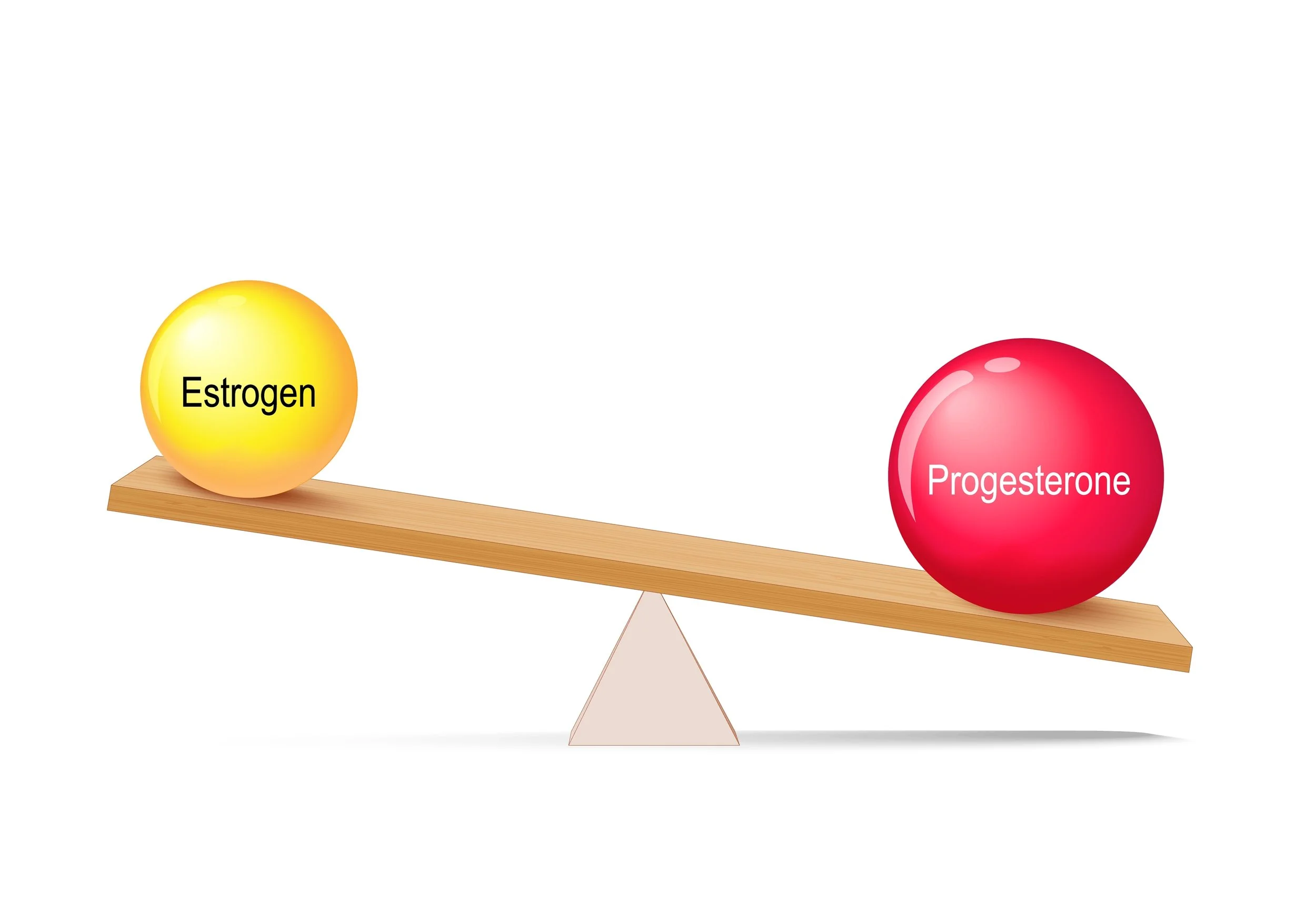
Estrogen dominance doesn't always mean your estrogen is sky-high. It means estrogen is high relative to progesterone — that critical hormonal balance has been disrupted. And here's the frustrating part: xenoestrogens are fat-soluble, meaning they accumulate in fat tissue and can stay there for a long time rather than clearing out quickly.
These chemicals are part of a broader group called endocrine-disrupting chemicals (EDCs), and they've only been introduced into our environment in the last 70 or so years through industrial, agricultural, and chemical manufacturing. In that short window, they've quietly made their way into nearly every corner of our daily lives.
Where Are Xenoestrogens Hiding?
This is the part that tends to surprise people, because the answer is: almost everywhere.
Personal Care and Beauty Products Parabens, phthalates, and synthetic fragrances are some of the most common xenoestrogens hiding in your lotion, shampoo, conditioner, makeup, and perfume. These ingredients are used as preservatives and scent carriers, but inside the body, they behave like estrogen. When you apply these products to your skin daily, absorption is constant and cumulative.
Plastics BPA (bisphenol A) is one of the most well-known xenoestrogens, found in many plastic food containers, water bottles, and the lining of canned goods. It can leach into food and beverages, especially when heated or exposed to sunlight. And here's something worth knowing: even products labeled "BPA-free" may contain similar compounds like BPS or BPF that carry similar estrogenic effects.
Conventionally Raised Meat and Dairy- Commercially raised beef, chicken, and pork are often treated with synthetic hormones to speed growth. When we consume these products, we take in those residual hormones. Dairy can be another source, especially from cows that weren't raised on pasture.
Pesticides and Herbicides- Many pesticides used in conventional agriculture are known endocrine disruptors. Foods with high pesticide residues like strawberries, apples, spinach, and peppers can be significant sources of xenoestrogen exposure when consumed regularly.
Household Cleaning Products and Air Fresheners -Synthetic fragrances in cleaning sprays, laundry detergents, fabric softeners, and air fresheners often contain phthalates, which mimic estrogen in the body. Just because something smells clean doesn't mean it's clean.
Hormonal Birth Control and Conventional HRT -Synthetic estrogens found in oral contraceptives and conventional hormone replacement therapy can also contribute to overall estrogen load, particularly if the body is already struggling to clear excess estrogen efficiently.
Estrogen Dominance Symptoms in Women
For women, estrogen dominance can show up across the full spectrum of reproductive life, from your cycling years through perimenopause and beyond. The symptoms can be easy to dismiss as "just stress" or "just getting older," but they're your body's way of signaling that something is out of balance.
Common signs of estrogen dominance in women include:
Heavy, painful, or irregular periods
PMS that feels extreme: mood swings, irritability, crying spells
Breast tenderness or fibrocystic breasts
Bloating and water retention
Weight gain, especially around the hips, thighs, and midsection
Fatigue that doesn't improve with rest
Brain fog and difficulty concentrating
Anxiety or depression
Low libido
Headaches or migraines, especially around your cycle
Uterine fibroids or endometriosis
For women in perimenopause, when progesterone naturally begins to decline before estrogen does, xenoestrogen exposure can make the transition significantly more difficult, amplifying symptoms that might otherwise be more manageable.
Long-term estrogen dominance has also been linked to an increased risk of estrogen-sensitive cancers, including breast, ovarian, and uterine cancer. This is not meant to frighten you. It's meant to underscore why understanding and reducing your exposure matters.
Estrogen Dominance in Men: Yes, It Affects Them Too
This part of the conversation often surprises people, because we tend to think of estrogen as a women's hormone. But men produce and need small amounts of estrogen for bone health, brain function, and cardiovascular support. The problem arises when that balance tips too far.
Men experience estrogen dominance when estrogen becomes disproportionately high relative to testosterone and progesterone. This can happen through xenoestrogen exposure, excess body fat (fat tissue produces estrogen), liver dysfunction, chronic stress, or age-related shifts in hormone production.
Signs of estrogen dominance in men include:
Gynecomastia (development of breast tissue, not just fat, but actual glandular tissue)
Belly fat and difficulty building or maintaining muscle
Low libido and erectile dysfunction
Low sperm count or infertility
Fatigue and low energy
Mood swings, irritability, or depression
Brain fog
Hair loss
Research shows that the testosterone-to-estrogen balance in males has been declining since the 1980s. Xenoestrogen exposure is considered one of the contributing factors, alongside obesity, alcohol use, and chronic stress. Excess estrogen in men can also increase the risk of prostate issues, stroke, and cardiovascular disease, making this a serious health concern that deserves far more mainstream attention.
How to Reduce Xenoestrogen Exposure and Support Your Body
The goal here isn't perfection; it's progress. You don't have to overhaul everything overnight, and living in a state of fear or anxiety about exposure does your hormones no favors either. But making intentional shifts can meaningfully reduce your total xenoestrogen load over time.
Swap out plastics. Switch to glass, stainless steel, or ceramic for food and water storage. Never heat food in plastic containers. This single swap can make a real difference.
Read your labels. Look for personal care products free from parabens, phthalates, and synthetic fragrance. Apps like EWG's Skin Deep database can help you evaluate what you're using.
Choose cleaner food. Prioritize organic produce, especially for the "Dirty Dozen" (the foods with the highest pesticide residue). Opt for pasture-raised, hormone-free meat and dairy when possible.
Filter your water. Many municipal water supplies contain trace estrogenic compounds. A quality carbon or reverse osmosis filter can reduce this exposure significantly.
Support your liver. Your liver is your primary estrogen-clearing organ. Nourishing it with bitter greens, cruciferous vegetables (broccoli, cauliflower, Brussels sprouts), adequate hydration, and limiting alcohol gives your body the best chance to process and eliminate excess estrogen.
Care for your gut. The estrobolome — the collection of gut bacteria involved in estrogen metabolism — plays a significant role in whether estrogen is properly excreted or recirculated. A fiber-rich diet and probiotic support are key here.
Move your body. Exercise helps metabolize and clear excess estrogen stored in fat tissue. Resistance training in particular has been shown to support healthy testosterone and estrogen balance in both men and women.
Swap synthetic scents. Replace synthetic air fresheners, candles, and fragranced cleaning products with unscented options or those made with pure essential oils.
Understanding xenoestrogens and estrogen dominance isn't about adding more to your worry list. It's about clarity. When you know what you're working against, you can make choices that support your body rather than burden it. Small, consistent swaps compound over time into meaningful change for your hormones, your health, and how you feel every day.
If you suspect estrogen dominance is playing a role in what you're experiencing, working with a practitioner who can look at the full hormonal picture, including how you're metabolizing estrogen and not just your levels, is a powerful place to start. Book a Rooted Foundations Assessment to get started.
Your body is always communicating with you. This is one message worth listening to.

Why You Can't Lose Weight: 3 Hidden Hormone Imbalances Wrecking Your Metabolism
Eating well, exercising, and still not seeing results? The answer might be hiding in your hormones. Discover the three key hormone imbalances — thyroid, insulin, and cortisol — that could be quietly sabotaging your metabolism, and what you can do to fix them.
So, you’re eating well, exercising, and doing all the “right” things, but your body feels like it’s working against you. Energy is low, the weight won’t budge, or maybe you’re struggling with mood swings or that mid-afternoon crash (cue one more cup of coffee). Sound familiar?
In my experience in helping people uncover the root causes of their health struggles, I’m here to tell you that these concerns are all rooted in your metabolism, which, by the way, isn’t just about burning calories. It’s the engine that powers your body, fueling everything from how you think to how you move. And at the heart of it all are your hormones; those tiny chemical messengers with a big job.
What’s tricky is that hormone imbalances often hide in plain sight, showing up as symptoms we tend to brush off or blame on aging, stress, or lack of willpower. But here’s the good news: once you understand how these hidden hormone imbalances can sabotage your metabolism, you can take steps to address them and start to become the healthiest, most vibrant version of you.
Let’s dive in!
🔥 Download my FREE Metabolic Makeover Guide to learn exactly how to get your metabolism working FOR you, not against you!
The Role of Hormones in Metabolism
You can think of metabolism as the network of processes your body uses to create energy. Everything you do (breathing, running, even thinking) depends on it. And at the center of this network are your hormones.
Three hormone systems are particularly critical to metabolism:
1. Thyroid Hormones (T3 and T4): These are the powerhouses of your metabolic system. Produced by the thyroid gland, T3 and T4 determine your body’s metabolic rate—the speed at which you burn energy. PMID: 32489580
2. Insulin: Insulin is your body’s key to energy storage and use. It helps shuttle glucose from your bloodstream into your cells, where it can be used for fuel. When insulin works as it should, your blood sugar stays steady, and your metabolism stays on track. PMID: 20392600
3. Adrenal Hormones (Cortisol): Often called the “stress hormone,” cortisol plays a dual role in metabolism. In short bursts, it can help you respond to stress by releasing energy stores.
The first step to getting back on track is understanding how these hormones impact your body and learning to recognize when something is off. PMID: 19470627
Thyroid Imbalances and Metabolism
Your thyroid is like the thermostat of your metabolism, keeping everything running at the right temperature and speed. But when it’s out of balance, the entire system can feel off. Whether it’s running too slow or too fast, a thyroid imbalance can impact how you feel, how you burn energy, and even how you store fat.
When your thyroid is underactive (hypothyroidism), low levels of T3 and T4 slow down every metabolic process. This means you might feel like your body is stuck in slow motion:
Fatigue that makes even small tasks feel overwhelming.
Unexplained weight gain, no matter how healthy you eat.
Dry skin, brittle hair, or nails that seem to break easily.
Constipation or digestive sluggishness.
Feeling constantly cold, even when others are comfortable.
On the flip side, an overactive thyroid (hyperthyroidism) means high levels of these hormones speed up your metabolism to the point where your body begins breaking down muscle and other tissues for fuel. It may feel like your metabolism is stuck in overdrive:
Rapid, unintentional weight loss.
Anxiety.
Heart palpitations that can leave you feeling jittery.
Trouble tolerating heat.
The tricky thing about thyroid imbalances is that they often get overlooked or misdiagnosed. But there are tools to help identify the problem:
Comprehensive testing: A full thyroid panel, including TSH, Free T3, Free T4, and thyroid antibodies, can provide a clearer picture of how your thyroid is functioning. Please reach out if this is something you would like to pursue.
Monitor basal body temperature: Low morning temperatures (below 97.8°F or 36.5°C) can sometimes indicate hypothyroidism.
There are also many actionable steps you can take to support your thyroid:
Nutritional support: Key nutrients like selenium, iodine, and zinc play a vital role in thyroid health. Incorporating foods like Brazil nuts (selenium), seaweed (iodine), and pumpkin seeds (zinc) can help. A simple test I use is the HTMA (Hair Tissue Mineral Analysis) to see where you stand in deficiencies or above optimal levels. This test can be a valuable tool in getting to the bottom of some of your health challenges and a great place to start balancing your metabolism. You can read more about this test here.
Stress management: Chronic stress elevates cortisol, which can interfere with thyroid function. Mindfulness, yoga, or even just a daily walk can go a long way in supporting your thyroid.
Struggling with low energy and stubborn weight? My FREE Metabolic Makeover Guide will show you how to reset your metabolism naturally. Download it here!
Insulin Resistance and Its Metabolic Impact
Insulin is a critical hormone for metabolism; however, if insulin resistance creeps in (when your body's cells stop responding as they should to insulin), the system starts to falter—and the metabolic consequences can be profound.
Insulin resistance often flies under the radar until it becomes a bigger problem, but there are early signs to watch for:
Weight gain, especially around the abdomen, that feels resistant to diet or exercise.
Fatigue after meals, particularly after high-carbohydrate meals.
Intense sugar cravings that can feel impossible to ignore.
Skin changes like darkened patches around the neck, armpits, or groin (a condition called acanthosis nigricans).
When insulin resistance sets in, your cells stop responding properly to insulin’s signals. This creates a metabolic cascade:
Inefficient glucose utilization: Sugar lingers in the bloodstream instead of being used as fuel.
Increased fat storage: The body stores excess glucose as fat, especially in the abdominal area.
Chronic inflammation: Elevated insulin and blood sugar levels drive systemic inflammation, which further disrupts metabolism.
The first step in tackling insulin resistance is confirming its presence. Here’s how to do that:
Lab tests: Ask for fasting glucose, HbA1c (a marker of average blood sugar over three months), and fasting insulin levels (this one is key and often overlooked). Elevated levels can indicate resistance. Need testing? Book your Strategy call here.
Glucose tolerance test or CGM: A glucose tolerance test measures how your body handles sugar over a few hours, while Continuous Glucose Monitoring (CGM) provides real-time insights into your blood sugar patterns throughout the day. I use Theia Health for myself and my clients to monitor blood sugar.
The good news is that insulin resistance is highly responsive to lifestyle changes. With the right steps, you can restore balance and improve your metabolic health:
Low-glycemic diet: Focus on whole foods like vegetables, legumes, lean proteins, and healthy fats to stabilize blood sugar. Avoid refined carbs and added sugars, which can exacerbate insulin resistance.
Resistance training: Strength training improves insulin sensitivity by encouraging muscle cells to take up glucose more efficiently.
Stress management: Chronic stress elevates cortisol, which can worsen insulin resistance. Incorporate relaxation practices like yoga, meditation, or nature walks into your routine.
Adrenal Hormone Imbalances (Cortisol Dysregulation)
As I’m sure we’re all well aware, stress is a natural part of life, but when it becomes chronic? It can wreak havoc on your hormones—especially cortisol, the primary stress hormone. Produced by your adrenal glands, cortisol plays a crucial role in your metabolism. When cortisol is out of balance, it can leave you feeling exhausted, irritable, and stuck in a metabolic rut.
Cortisol dysregulation can manifest in a variety of ways, depending on whether levels are too high, too low, or fluctuate unpredictably:
Chronic fatigue that doesn’t improve with rest.
Stubborn weight gain, particularly around the abdomen.
Cravings for salty or sweet foods, especially during periods of stress.
Irritability or mood swings that feel hard to control.
Difficulty sleeping, whether it’s trouble falling asleep, staying asleep, or waking up feeling unrested.
Cortisol is like a double-edged sword when it comes to metabolism. In short bursts, it’s helpful—mobilizing energy and helping you respond to immediate challenges. But chronic stress and consistently high cortisol levels can lead to:
Muscle breakdown: Cortisol breaks down muscle tissue to release glucose, reducing your body’s ability to burn calories efficiently.
Fat storage: High cortisol encourages fat storage, particularly in the abdominal area, where it’s most metabolically active and inflammatory.
Blood sugar spikes: Cortisol increases blood sugar levels, promoting insulin resistance over time.
When cortisol levels are too low—sometimes called “adrenal fatigue”—your metabolism can slow significantly, leading to low energy, poor recovery, and difficulty maintaining a healthy weight.
The first step to addressing cortisol imbalances is understanding your body’s stress response:
Saliva or urine cortisol testing: These tests measure cortisol levels at multiple points throughout the day to assess your natural rhythm. If you are interested in going this route, please reach out or book a Free call.
Evaluate stress levels and symptoms: Reflect on patterns in your energy, mood, and cravings, particularly during times of stress.
Balancing cortisol is all about reducing chronic stress and supporting your adrenal glands:
Support with adaptogens: Herbs like ashwagandha, rhodiola, and holy basil can help modulate your stress response and improve adrenal resilience.
Stress reduction techniques: Mindfulness practices like meditation, yoga, or deep breathing exercises can lower cortisol levels and improve overall stress tolerance.
Maintain consistent blood sugar levels: Eating balanced meals with protein, healthy fats, and fiber can prevent the blood sugar dips and spikes that stress your adrenal glands.
Conclusion
Sometimes, despite your best efforts—cleaning up your diet, managing stress, getting enough sleep—your body still doesn’t respond the way you hoped. If you’ve been stuck in a cycle of frustrating symptoms despite making positive changes, there’s a good chance your body is trying to tell you something.
A functional medicine approach goes beyond simply treating symptoms; it focuses on uncovering the root causes of your hormonal imbalances. Book a FREE call to learn how a functional and holistic approach can help you from the inside out!

The Hidden Chemicals Disrupting Your Hormones — And What to Do About It
You're eating well, sleeping enough, and managing stress — so why does something still feel off? The answer could be hiding in your everyday products. Learn how endocrine-disrupting chemicals (EDCs) found in plastics, cosmetics, and cookware are quietly interfering with women's hormonal health, and what simple swaps you can make to protect yourself.
You're doing everything right. You're eating well, getting enough sleep, and trying to manage stress. And yet something still feels off: your energy is unpredictable, your cycle is irregular, your mood shifts without warning. If you've ever felt dismissed by a doctor who chalked it all up to "just hormones," or “just aging,” you're not alone. But here's what most of us were never told: your environment may be quietly working against you.
A class of chemicals called endocrine-disrupting chemicals (EDCs) is found in everyday products, from the packaging around your lunch to the lotion on your nightstand. They can interfere with your hormonal health in ways that are only beginning to be understood. For women especially, the effects can be far-reaching.
Let's break down what EDCs are, how they affect the female body, and, most importantly, what you can do about them.
Understanding Endocrine Disrupting Chemicals (EDCs)
Your endocrine system is essentially your body's internal messaging network. It produces and regulates hormones that control everything from your metabolism and mood to your sleep and reproductive health. When that system is working well, your body hums along in balance. When something interferes with it, the ripple effects can show up almost anywhere.
EDCs are synthetic or naturally occurring chemicals that disrupt the system by mimicking hormones, blocking them, or interfering with how they're produced and broken down. Even in very small amounts, they can throw off delicate hormonal processes.
The scale of exposure is striking. Recent research estimates there are around 350,000 chemical compounds in circulation globally. The CDC's National Health and Nutrition Examination Survey has detected over 212 synthetic chemicals in the blood and urine of 99% of people tested. These aren't rare exposures — they're everyday ones.
That said, not all chemicals are harmful. Many have meaningfully improved our quality of life. The concern is specifically with the subset that interferes with our hormonal health.
How EDCs Affect Women’s Health
Women's hormonal systems are particularly complex, cycling through changes monthly and across decades of life, which means there are more points of vulnerability when something disrupts the process.
EDCs affect the female body in two primary ways:
Hormone mimicry- Some EDCs have molecular structures similar enough to estrogen, thyroid hormones, or androgens that they can bind to hormone receptors and trigger a response — like a copied key that fits the lock but doesn't quite belong there. This can lead to estrogen dominance, a hormonal imbalance linked to conditions like breast cancer and endometriosis.
Blocking and interference- Other EDCs block hormone receptors, preventing natural hormones from doing their job. Some disrupt how hormones are metabolized — particularly in the liver, which plays a key role in clearing excess hormones from the body. When that process is compromised, synthetic chemicals can accumulate and tip the hormonal balance further.
:
Health Conditions Linked to EDC Exposure
Because the endocrine system touches nearly every part of the body, EDC exposure has been connected to a wide range of conditions that disproportionately affect women:
Infertility and menstrual disorders- Phthalates, found in many plastics and fragrances, have been linked to longer time to conception, irregular cycles, and decreased egg quality.
Endometriosis- Chemicals, including BPA, phthalates, and dioxins, have been associated with the inflammatory response that promotes endometrial lesions. Research suggests that female fetuses exposed to EDCs in utero may have a higher risk of developing endometriosis later in life.
PCOS and early puberty- Polycystic ovary syndrome affects an estimated 70% of women who have it unknowingly. EDCs contribute to the hormone disruptions at the core of PCOS, including insulin resistance and elevated androgens. Exposure has also been linked to earlier onset of puberty, which itself increases risk for PCOS and breast cancer.
Breast cancer- Parabens, phthalates, and BPA can mimic estrogen, promoting breast tissue growth and creating conditions that raise breast cancer risk.
Early menopause- PFAS, chemicals found in nonstick cookware and water-resistant fabrics, have been associated with accelerated menopause onset. Entering menopause earlier raises the risk for cardiovascular disease, osteoporosis, and depression.
Practical Steps to Reduce EDC Exposure
Learning all of this can feel heavy. But you don't need to overhaul your entire life overnight. Small, consistent changes add up, and even reducing exposure incrementally can support your body's ability to maintain hormonal balance.
Rethink your personal care products- Many conventional cosmetics and skin care products contain phthalates, parabens, and synthetic fragrances. Look for fragrance-free or clearly labeled natural alternatives. "Fragrance" on an ingredient list can be a catch-all for dozens of unlisted chemicals.
Switch to glass or stainless steel food storage- Plastic containers, especially when heated, can leach BPA and phthalates into your food. Glass and stainless steel are straightforward swaps that reduce a daily exposure point.
Filter your drinking water- Tap water can carry traces of EDCs from pesticide runoff and industrial contamination. A quality filter certified to remove PFAS, BPA, and pesticides is worth the investment.
Skip the nonstick cookware- Most nonstick pans are coated with PFAS. Stainless steel, cast iron, and ceramic are safer alternatives, and they last longer, too.
Prioritize organic produce where it counts- You don't have to buy everything organic, but focusing on fruits and vegetables known to carry higher pesticide residues (commonly called the "Dirty Dozen") can meaningfully reduce your exposure.
A Note on Women's Health and EDC Research
Historically, most medical research was conducted on men, leaving significant gaps in our understanding of how environmental exposures affect women specifically. That's beginning to change, but it means many women are navigating health challenges that science is only recently catching up to. Raising awareness matters. Advocating for better research and stronger environmental regulations matters. And so does making informed choices in your own daily life — not out of fear, but out of a genuine desire to support your health and feel your best.
The Bottom Line
Endocrine-disrupting chemicals are pervasive, but you're not powerless. The more you understand about where these chemicals show up and how they interact with your body, the more equipped you are to make choices that work for your health rather than against it.
Start with one or two swaps. Talk to your doctor about hormonal symptoms that haven't been fully explained. And know that paying attention to these things isn't alarmist — it's one of the most practical things you can do for your long-term wellbeing.
If you’re feeling called, I invite you to explore my hormone and symptom assessment options.
Why Your Blood Work Is Normal But You Still Feel Awful — And What HTMA Can Reveal
If your blood work keeps coming back normal but you still feel exhausted, foggy, or out of balance, HTMA could be the missing piece. Hair Tissue Mineral Analysis is a non-invasive lab test that reveals your mineral levels, metabolic type, and toxic metal burden over the past two to three months — information that standard tests simply can't provide. Learn what HTMA measures, how it works, and how personalised interpretation turns your results into a real plan for better health
If you've ever felt like something is off — fatigue that won't budge, brain fog, mood swings, stubborn weight, digestive problems, and yet your standard blood work comes back "normal," you are not alone. And more importantly, you may not have been looking in the right place.
Hair Tissue Mineral Analysis (HTMA) is a sophisticated laboratory test that measures the mineral content stored in your hair. Those mineral levels paint a remarkably detailed picture of your body chemistry over the past two to three months — including nutritional imbalances, toxic metal burden, metabolic function, and even how efficiently your organs and glands are working.
Let's break down exactly what HTMA is, why it's different from other tests, what it can reveal, and how working with a trained practitioner takes your results from raw data to a real, personalized roadmap for better health.
So What Exactly Is HTMA?
Hair Tissue Mineral Analysis is a laboratory test that analyzes a small sample of scalp hair, about a tablespoon, cut close to the root. It uses a process called ICP-Mass Spectrometry (ICP-MS), one of the most precise analytical instruments in modern science.
The hair that grows from your scalp is nourished by the bloodstream. As it forms, it incorporates the minerals and toxic metals circulating and stored in your body's tissues. Once those minerals are locked into the hair shaft, they stay there. This makes hair a unique biological record of what your body has been doing over months, not just what happened on the morning of a blood draw.
"Your hair holds a record of your internal environment — a months-long story that blood tests simply cannot tell."
Why This Matters
Blood tests give you a snapshot in time, at the moment of the test. HTMA gives you the full film reel: your actual tissue storage levels over time. This is where real nutritional status lives.
The lab used for this testing, Trace Elements, Inc. (TEI), is one of the world's leading hair analysis laboratories, processing over 50,000 samples per year and specializing exclusively in hair mineral analysis. Their methodology and reference ranges are based on decades of clinical research, and each report is built around hundreds of evaluated factors, not just raw numbers.
HTMA vs. Blood & Urine Tests: What's the Difference?
This is one of the most common questions, and the answer matters enormously for your health decisions.
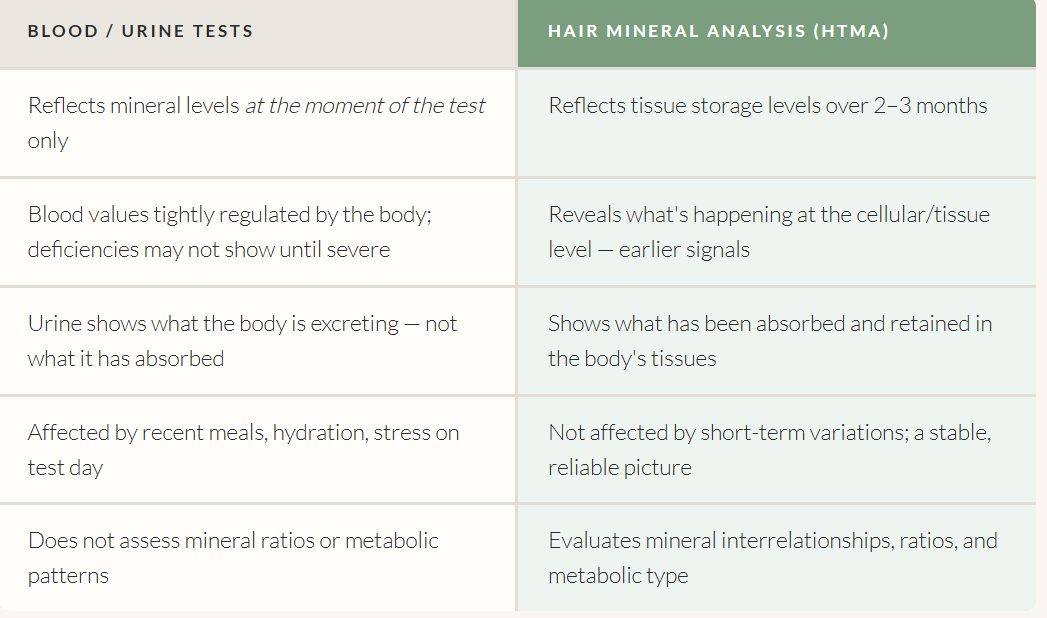
Think of blood and urine tests as photographs, and HTMA as the documentary. Both have value — but only one tells the story of what's really been going on beneath the surface.
What Does HTMA Actually Measure?
A comprehensive HTMA report analyses both nutritional minerals and toxic heavy metals. But the magic isn't just in individual levels; it's in how those minerals relate to one another. The ratios between minerals reveal information about your glandular function, stress response, metabolic rate, and much more.
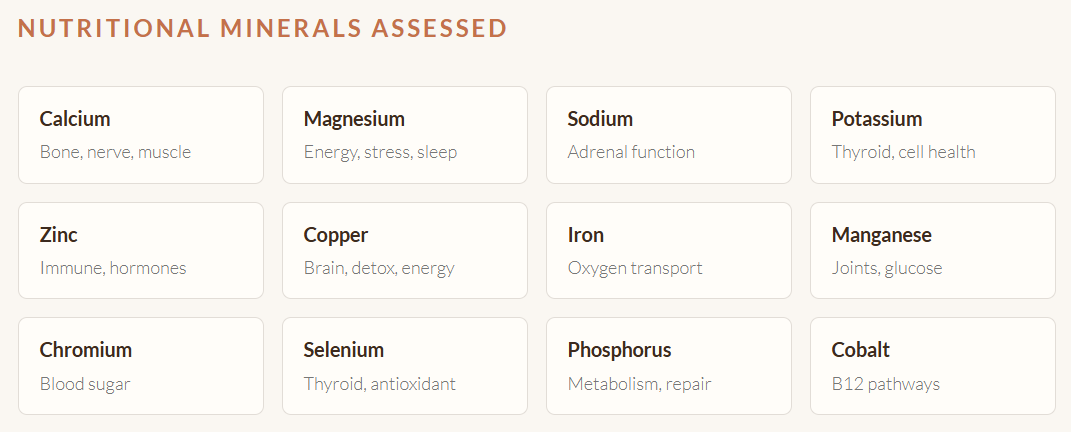
Mineral Examples
Toxic Heavy Metals Screened
HTMA is one of the most effective and accessible tools for identifying heavy metal accumulation in the body, often years before clinical symptoms appear. Metals assessed include lead, mercury, cadmium, arsenic, aluminum, nickel, and more.
An Important Note on Heavy Metals
Elevated toxic metals on an HTMA report don't necessarily mean acute toxicity. They indicate exposure and retention over time, which is valuable information that allows us to support your body's natural detoxification pathways proactively, before symptoms become serious.
What HTMA Reveals Beyond the Numbers
This is where HTMA truly sets itself apart from any other test. A well-interpreted report doesn't just list mineral levels, it reveals the underlying patterns that drive your symptoms and health challenges.
Your Metabolic Type
Your mineral levels reveal whether you are a Fast Metabolizer or a Slow Metabolizer — and this has profound implications for which supplements you should (and shouldn't) take. Taking the wrong supplements for your metabolic type can actually worsen imbalances. A well-matched protocol supports your metabolism instead of working against it.
Adrenal & Thyroid Function
The sodium-to-potassium and calcium-to-potassium ratios are windows into your adrenal and thyroid activity, respectively. These are glands that conventional medicine often dismisses as "fine" based on standard panels, yet they are central to energy, mood, weight regulation, and resilience.
Why "Eating Well" May Not Be Enough
Soil mineral depletion, environmental pollutants, medication effects, genetic factors, gut health, and your individual metabolic type all influence what your body actually absorbs and retains from food. Two people can eat identical diets and have radically different nutritional profiles. HTMA shows your actual status — removing the guesswork from supplementation entirely.
Mineral Interrelationships
Minerals don't work in isolation. Zinc and copper compete. Excess calcium can suppress magnesium. Too much vitamin C can deplete copper. Excess iron creates damaging free radicals. An HTMA report evaluates these interactions, which is why your recommendations may include nutrients that appear "high" on your test or omit those that appear "low." The overall pattern is what guides the protocol.
Who Can Benefit from HTMA?
The short answer: almost anyone. HTMA is not just for the unwell. It's used by athletes optimizing performance, parents monitoring their children's development, and people committed to long-term health maintenance, as well as those actively struggling and seeking answers.
HTMA may be particularly revealing if you're dealing with:
Persistent fatigue or low energy despite adequate sleep
Anxiety, depression, or mood dysregulation
Difficulty losing or maintaining weight
Brain fog or poor concentration
Hormonal imbalances, PMS, or thyroid concerns
Digestive issues and nutrient absorption problems
Hair loss, skin problems, or brittle nails
Known or suspected heavy metal exposure
"Normal" blood work, but persistent symptoms
Pregnancy planning or postnatal recovery
It is also safe and useful for children, and can be retested every three to four months to track progress and update recommendations as your mineral balance shifts.
Why Interpretation Is Everything
Here is something important that is rarely discussed: the raw numbers in an HTMA report mean very little without skilled interpretation. A mineral that appears elevated may actually indicate a relative deficiency. A level that appears low may not need direct supplementation at all.
This is why I don't simply pass along a lab printout. When you complete an HTMA through my practice, I provide a thorough, personalized interpretation of your results, taking into account:
Your full mineral profile and all key ratios
Your metabolic type and what it means for your dietary and supplement choices
Your toxic metal burden and what it suggests about past exposures
Your health history, current symptoms, diet, and lifestyle
Targeted, prioritized supplement and dietary recommendations — specific to you
Follow-up support to review your progress and retest when appropriate
The Difference Personalized Interpretation Makes
There is no such thing as a "standard" HTMA protocol. The right supplements for a Fast Metabolizer are often exactly the wrong ones for a Slow Metabolizer. Getting this right — for your body — is the entire point.
How to Get Started: The Simple Process
1- Book your HTMA consultation with Comprehensive Wellness Assessment
I'll send you everything you need.
2- Receive your Kit and Collect your hair sample at home
Using the simple instructions provided, you take a small sample of scalp hair — about a tablespoon — from the back of your head, close to the root. No clinic visit required.
3- Send to the lab
Your sample is sent directly to Trace Elements, Inc. (TEI), a dedicated hair analysis laboratory processing thousands of samples with rigorous quality control.
4- Receive your personalized report & recommendations
Once the results are back, I analyze your full mineral profile and prepare a comprehensive, personalized interpretation with targeted dietary, lifestyle, and supplement recommendations, along with a wellness roadmap. I walk you through it with a detailed screen video, so you can view it on your own time, OR you can upgrade to an in-person telehealth session. We will walk through everything together.
5- Follow your protocol & retest
Your program is designed to evolve with you. Retesting every three to four months tracks your progress, confirms what's working, and allows your protocol to be refined as your mineral balance improves.

Perimenopause and Menopause: Why You’re Not Getting Relief (Even When You’re Doing Everything Right)
If you've tried everything for your perimenopause or menopause symptoms — HRT, supplements, diet changes — and still feel awful, you're not broken. The problem isn't your effort; it's that no one has given you the right blueprint for your body. Discover why a one-size-fits-all approach keeps women stuck, and what it actually takes to find lasting relief.
You might be one of those women who feels like you’ve tried everything, and you’re still on the struggle bus. Maybe it’s been years of trying to lose the same 10 pounds, the hot flashes, brain fog, the mood swings, or the exhaustion that just won’t lift. It might look like this: You try something new—something that worked for your friend, your neighbor, or someone online. It helps… for a little while, or maybe not at all.
Your labs come back “normal,” and yet, you know something isn’t right. So you keep searching and trying, and wondering why nothing seems to truly work.
Here’s the truth: It’s not that your body is broken. It’s that you haven’t yet given it what it specifically needs. Finding relief in this season is not one-size-fits-all. It’s bioindividual, and I help women uncover their needs through rooted assessments.
Even though each person is individual, there are a few categories one can be placed in to help direct care. Let me explain this in a way that might land. I like stories, and in my own studies over the years, even ages ago, when I was in nursing school, I always appreciated analogies in order for things to really make sense.
Imagine that every woman entering perimenopause or menopause is sent to a place called Motherwort Castle. (And yes—if you know me, you know I’m an herbalist. Every house here is named after a plant traditionally used in women’s health)
Every woman’s length of stay here varies. You may stay for a few years… or for decades. When you arrive, you’re placed into one primary house that will determine what your stay will be like and how successful you will be when you graduate.
Each house represents a different underlying blueprint in the body and requires a different approach.
The Houses of Motherwort Castle
1. The Cohosh Condo- “Everything changed overnight.”
If you are sorted into this house, suddenly, what seemed like overnight, you might notice:
Weight gain (especially around the middle)
Hot flashes and night sweats
Achy joints
Decreased libido
Skin changes
Vaginal dryness or dry eyes
Muscle loss or weakness
For women in this house, hormone replacement therapy (HRT) can be helpful. But here’s the nuance: If you’re also hanging out in other houses (and most women are), hormones alone won’t fully resolve things. And even when HRT works, it’s not the whole picture for long-term vitality.
2. The Dandelion Den- “I’m doing everything… and nothing is working.”
This house is incredibly common—and often overlooked. You may feel:
Bloated, sluggish, and heavy
Foggy and fatigued
Unable to lose weight
Frustrated that nothing “sticks”
Standard labs might show elevated cholesterol, blood sugar imbalances, and underlying inflammation, among other findings.
What’s happening here? Your body is likely not clearing and processing efficiently. This often points to sluggish detox pathways (especially in the liver), hormones that are not properly metabolized, and toxin buildup that interferes with function. The bottom line is: you can have “enough” hormones, but you’re not able to utilize them properly. What’s more, is that adding hormones (or supplements) without improving clearance can actually make symptoms worse. And despite what you may hear, aggressive detoxing is not the answer here. In this season, your body often lacks the capacity for harsh detox protocols. You need added support, not depletion.
3. The Vitex Treehouse- “My body doesn’t tolerate anything.”
This is the house that doesn’t get talked about enough. You might try HRT, supplements, and other natural protocols, but instead of feeling better, you feel worse. Or things work briefly, but then don’t last. This is often a cellular communication problem.
You can think of your cells like a bus. Hormones need to “get on the bus” (enter the cell) to reach the site where they do their job. If they can’t, they don’t reach their destination and aren’t utilized, causing your symptoms to persist. This is less about how much you have, but more about whether your body can actually use it.
4. The Angelica Abode- “There’s something deeper going on.”
This house includes women who have, or develop, underlying conditions alongside hormonal changes. This aften presents in the form of: Autoimmune conditions (like Hashimoto’s), chronic fatigue syndrome, fibromyalgia, or other long-standing health challenges that have flared.
What happens in this house is important because hormones were compensating in your 20s and 30s, but now they’re not as easily doing so. So, underlying issues that were once quiet, they start to surface.
These women often feel deeply exhausted and react poorly to interventions. They need a more layered approach. In this case, you cannot separate hormones from the root cause health issues. They must be addressed together.
Why You’re Still Struggling
Here’s the reality: You are likely living in more than one house. You may be “sofa surfing” through 2 or more, and this can feel confusing, overwhelming, and like nothing will ever work. The reason is you’re trying to apply one solution to a multi-layered problem.
Your Next Step: A Personalized Approach
I created the Rooted Wellness Assessment to stop the guessing because it isn’t working. No more generic protocols. Let's build one that's just for you. Inside this assessment, we identify your HIDDEN stressors, connect the dots between your symptoms, and create a personalized plan that actually fits your body and life. Even if your labs are “normal”, you’re already on HRT, or you just want a more natural approach.
There is a reason you feel the way you do, and there is a way forward. You can learn more about the assessment session here.
Optional: Going Deeper with DUTCH Testing
If you want deeper insight, we can layer in DUTCH hormone testing. This test goes beyond basic hormone levels and shows:
How much are you producing?
What’s actually available for use
How your body is breaking down and clearing hormones
Because the truth is: You can have “normal” hormone levels and still feel awful. What matters is how your body is using them.
To conclude: This isn’t “just aging.” And it isn’t “JUST MENOPAUSE,” and this isn’t something you just have to push through. It’s not your fault that what you’ve tried hasn’t worked; you simply haven’t been given the right blueprint yet.
Not sure? Book a FREE Strategy Session Here
Understanding Hormone Testing: Why the Method Matters
Hormone testing isn’t as simple as a single lab result. There are different ways to measure hormones—blood, saliva, and urine—and each one tells a different part of the story. But what many women are never told is this: it’s not just about how much hormone you have, it’s about how much is actually available and how your body is using it. In this article, we break down the differences in hormone testing and why looking deeper—beyond a single snapshot—can change how you understand your symptoms and your body.
There isn’t just one way to measure hormones. In fact, there are three primary methods: blood (serum), saliva, and urine. Each one offers a different lens into what’s happening inside the body—and each has its strengths and limitations.
When we talk about hormones, how we test them matters just as much as what we test. Let’s walk through them in a way that actually makes sense.
Serum Testing (Blood Work)
This is the standard approach you’ll experience in conventional medicine.
It’s simple, familiar, and widely used. A blood draw is taken, and your hormone levels are measured at that moment in time.
Where serum testing shines:
Blood testing is excellent for certain types of hormones, especially those involved in signaling and regulation, such as:
Thyroid hormones
Insulin
FSH and LH
Prolactin
SHBG (sex hormone binding globulin)
These markers help give a broad picture of how your endocrine system is functioning. An important point most people are never told is that when hormones circulate in the blood, most are actually bound to proteins, making them unavailable for use in the body.
Only a small portion of the hormone levels are “free” that can move into your tissues, interact with receptors, and actually do their job. You can kind of think of your hormones like money. Some of your money is locked away in a savings account—you can see it, but not readily available. That’s your bound hormone. Then there’s the money in your wallet—the cash available to actually spend. That’s your free hormone. Blood testing often tells us how much money you have in total. But what really matters is how much you can actually use.
Urine and saliva testing give us a better picture of that “cash in hand”—the hormone that’s active, available, and doing work in your body. So while blood levels can look “normal” on paper…you may not have enough free, active hormone reaching your tissues. In addition, blood serum levels reflect only a single moment in time, which can be limiting—especially for women whose hormones fluctuate daily and throughout their cycles.
Saliva Testing
Saliva testing became popular in the functional medicine world because it offers a more dynamic view of hormones. It’s non-invasive and can be done at home, which makes it more accessible.
Saliva reflects the free, bioavailable portion of hormones—the same fraction that is active in the body. This gives us a better sense of what your body can actually use, rather than just what is present. It also allows for multiple collections throughout the day, unlike serum, which can be helpful for tracking cortisol patterns, understanding daily rhythms and looking at shifts across the menstrual cycle.
Saliva testing can have limitations, as it’s sensitive to external factors such as food, drink, and oral hygiene. It also doesn’t show us how hormones are being metabolized, which is a key missing piece, especially for estrogen and detoxification pathways. Furthermore, if someone is using hormone therapy, results can be skewed unless those hormones are paused.
Urine Testing
Urine testing offers one of the most comprehensive views of hormone health—especially when we’re looking beyond just levels. This is where things can come full circle:
The free (unbound) hormones—the same ones that are active in your tissues—are also the ones that eventually make their way into urine. So when we measure hormones in urine, we’re getting a reflection of what is bioavailable in the body (what your body can actually use) and how those hormones are processed and broken down. This is why urine testing often correlates more closely with symptoms.
There is a strong correlation between serum and urinary hormone levels for sex hormones, but urine provides more context, especially regarding metabolism. There is also a hormone that works a little differently but is extremely important: cortisol. Cortisol is more water-soluble, which means it passes into urine more readily.
So when we measure cortisol in urine, we are specifically looking at free, bioavailable cortisol—the form your body is actively using. And because urine testing can be done at multiple points throughout the day, we can see your true daily cortisol rhythm, rather than relying on a single snapshot.
This is incredibly important when assessing:
Stress patterns
Burnout or “wired and tired” states
Nervous system regulation
And what makes urine testing especially useful is that it doesn’t just tell us how much hormone is present—it shows us how your body is using it because its showing us Estrogen metabolism pathways (protective vs. more inflammatory), Adrenal function patterns, Melatonin, and sleep-related hormones, and overall hormone balance and flow.
Hormone health isn’t just about how much you have. It’s about how much is available, how well your body uses it, and how effectively it’s processed and cleared. You can have “normal” labs and still feel completely off. When we start looking at hormones through this more complete lens, things begin to make more sense.
Why I like DUTCH Testing
This is where I feel DUTCH testing bridges the gap. It combines the strengths of urine testing with detailed insight into hormone metabolism and daily patterns—giving us a much more complete picture of what’s really going on.
It doesn’t just look at your hormones—it looks at what your body is doing with them. It goes beyond “levels”, meaning most hormone tests tell us how much of a hormone is present. The DUTCH testing goes a step further by showing how much hormone you’re making, how much is available for use, and how your body is breaking them down and clearing them. This breakdown process matters more than most people realize, because you can have “normal” hormone levels, but if your body isn’t processing them well, you can still experience symptoms.
Remember how we talked about free (active) hormones? DUTCH testing captures that—but it also looks at what happens after your body uses those hormones. These are called metabolites (you can think of them as the “end products” after your body has done its work). This gives us insight into whether estrogen is being processed in a supportive way, or being pushed down pathways that can contribute to symptoms, a piece that blood and saliva testing simply don’t show.
It’s Non-Invasive and Easy to Do at Home
No blood draw. No lab visit. Need I say more? DUTCH uses dried urine samples collected at home throughout the day. It’s simple, practical, and still gives us a very detailed picture of what’s happening inside your body. It will also show the full hormone, not just a snapshot. This helps us see patterns so that we can understand. This is especially important in midlife, when hormones are shifting—not static.
Can Map Your Hormones Across Your Cycle
For women who are still cycling, there’s an option to track hormones across the entire month.
This allows us to see how estrogen and progesterone rise and fall, where imbalances may be happening and why certain symptoms show up at specific times. This can be incredibly helpful for things like PMS, irregular cycles, PCOS, and estrogen dominance patterns.
Gives Insight Into Stress and Sleep Patterns
This is my favorite thing about DUTCH: it also looks at cortisol (your stress hormone) throughout the day. This is incredibly valuable information, and it's not just about how much you have, but how it’s rising and falling. This helps us understand patterns like feeling wired at night but exhausted in the morning, midday crashes, and chronic stress or metabolic burnout. We can also measure melatonin, giving insight into your sleep-wake rhythm.
Looks at the Bigger Picture of Your Health
Another powerful feature is the inclusion of something called organic acids. You don’t need to get caught up in the term—what matters is what they tell us. These markers give clues about our nutrient needs, detoxification pathways, gut health, energy production, inflammation, and oxidative stress. So instead of looking at hormones in isolation, we start to see the whole system.
Helps Create a Truly Personalized Plan
Because this test is so detailed, it allows us to move away from guessing. We can tailor support based on what your body actually needs, whether that includes: targeted nutrition, nervous system support, lifestyle shifts, or hormone support when appropriate. This is where testing becomes not just informative—but actionable.
You are not a set of numbers on a lab report. Your symptoms are real. Your experience matters. And when we look deeper—at how your body is functioning, not just what’s “in range”—we can begin to connect the dots in a way that finally makes sense.
If you would like to explore how we can connect the dots and/or are interested in DUTCH testing, please reach out to book your free consultation. I look forward to speaking with you soon!
IN Wellness,
Tess, RN, FDN-P, Clinical Herbalist
CURIOUS ABOUT BHRT? READ Why Hormone Testing Matters Before Starting BHRT (It’s Not Optional)

Why New Year’s Resolutions Don’t Work—and What to Do Instead
Every January, we’re told it’s time to reset and reinvent ourselves—but most resolutions don’t last. This post explores why traditional New Year’s resolutions fail, especially in midlife, and offers a gentler, more sustainable approach rooted in self-awareness, capacity, and strengthening your health foundations instead of starting over.
Every January, we’re told this is the moment to reset, reinvent, and finally “get it together.”
New goals.
New routines.
New rules.
And yet, by February, most New Year’s resolutions have already fallen apart.
This isn’t because people are lazy, undisciplined, or unmotivated. It’s because the traditional idea of a New Year’s resolution is fundamentally flawed—especially in midlife.
If you’ve struggled to stick with resolutions in the past, this isn’t a personal failure. It’s a sign that the approach doesn’t fit your real life.
Why New Year’s Resolutions So Often Fail
1. They’re built on pressure, not self-awareness
Many resolutions are rooted in guilt, comparison, or a belief that we need to “fix” ourselves. They’re based on who we think we should be, not who we actually are right now.
When change starts from pressure, it rarely lasts.
2. They ask for too much, too fast
Extreme changes—cutting out entire food groups, committing to intense workout schedules, overhauling daily routines—ignore the realities of stress, energy, hormones, and responsibilities.
Your body doesn’t adapt well to force. Especially when it’s already tired.
3. They ignore the foundation
Trying to optimize health without addressing basics like sleep, nourishment, stress, and gentle movement is like trying to build a house without a solid base. Eventually, something gives. For many people, this is where metabolic health begins to suffer—energy drops, inflammation increases, and the stress response stays switched on.
This is one of the most common patterns I see in my work—people doing “all the right things” while skipping the very foundations that support resilience and metabolic health.
4. They rely on all-or-nothing thinking
Miss a day? Have an off week? Many people decide they’ve “failed” and quit entirely. Sustainable change doesn’t work that way. It’s flexible, adaptive, and imperfect by design.
What Not to Do When Making a Resolution
If you’re approaching a new year—or any season of change—here’s what tends to backfire:
Setting goals based on guilt or punishment
Copying someone else’s routine without considering your own lifestyle.
Trying to change everything at once
Ignoring your current stress load and capacity
Expecting it to look perfect
Your body and nervous system need support—not force, especially if your not in your 20’s anymore.
The Importance of Meeting Yourself Where You Are
One of the most overlooked parts of lasting change is capacity. What do I even mean by this? Your energy, time, stress levels, sleep quality, hormone shifts, work demands, and caregiving responsibilities all matter. What worked in your 20s is not realistic—or even healthy for you now.
Meeting yourself where you are means asking yourself a few question:
What can I realistically support right now?
What feels nourishing instead of overwhelming?
Where does my foundation feel shaky?
This isn’t about lowering standards.
It’s about creating change that actually sticks.
Intentional Change vs. New Year’s Resolutions
Instead of making resolutions, consider focusing on intentional change. This is where we create small, doable changes that come from building awareness in what your body needs instead of the “all or nothing” pressure. You want to build these changes on a solid foundation and focus on consistency over intensity. And maybe most importantly, we need to be flexible enough to adapt to real life. Often, the most effective approach is identifying the one thing that would make everything else feel a little easier—and starting there. Not because it fixes everything, but because it strengthens the foundation everything else rests on.
For example:
Instead of “I’m working out five days a week,” try
→ “I’m moving my body for 10 minutes after lunch.”
Instead of “I’m cutting out sugar,” try
→ “I’m adding protein to my breakfast.”
Instead of “I need a full reset,” try
→ “I’m strengthening my foundation.”
These shifts may seem simple—but they’re powerful.
Start With Your Foundation
Sustainable health isn’t built on motivation alone. It’s built on foundations—sleep, nourishment, movement, stress regulation, and daily habits that support your body rather than fight it. When these foundations are nurtured, the body has the capacity to regain balance and resilience naturally.
If you’re not sure where to begin, that uncertainty is understandable. Most people were never taught how to assess their foundation—only how to push harder when things feel off.
An Invitation to Start Gently
If this resonates, and you’re craving a different approach as you move into the new year, I created The Rooted Habits Challenge as a gentle place to begin.
It’s a supportive experience designed to help you understand what your body is asking for
And to identify where your foundation needs support.
This isn’t a reset.
It’s not a diet or a workout plan.
It’s an opportunity to nurture and strengthen your metabolic health—one grounded step at a time.
You don’t need a new version of yourself this year; you need support for the version of yourself you already are. And you can start—right where you are because it’s designed to help you meet your body where it is, strengthen your foundations, one supportive habit at a time.
You can learn more about it here.
However you choose to move forward, know this: meaningful change doesn’t come from pushing harder or starting over. It comes from listening, supporting your body, and taking small steps that build resilience over time. There’s no rush and no right timeline — only the next gentle step that feels possible for you.
Why Metabolism Isn’t Just About Weight Loss (And What It Really Means)
Metabolism isn’t just about calories or weight. Learn how it impacts your energy, hormones, mood, and why metabolic chaos keeps you stuck.
If you think metabolism is just about how fast you burn calories, you’ve been sold half the story.
Most of the clients I work with come in thinking their metabolism is broken because the scale won’t budge or they’re gaining weight despite doing "everything right." But here's the truth: your metabolism is the engine behind everything your body does — from how you digest food, regulate hormones, handle stress, sleep, think, and feel.
When it’s working well? You wake up energized, think clearly, feel strong, and move through life with resilience.
When it’s not? You end up in what I call metabolic chaos: that frustrating state where fatigue, cravings, brain fog, mood swings, and stubborn weight become your norm.
So let’s get clear: metabolism is not just about weight loss. It’s the foundation of your vitality.
What Actually Is Metabolism?
Think of metabolism as your body's full-time operations manager. It’s overseeing all the biochemical processes that keep you alive and (hopefully) thriving: turning food into energy, detoxifying waste, producing hormones, balancing blood sugar, repairing cells, and more.
In nerdier terms, metabolism includes two main processes:
Anabolism: building up (tissue repair, hormone production, energy storage)
Catabolism: breaking down (digestion, energy release, cellular cleanup)
Your basal metabolic rate (BMR) is the energy your body needs just to exist — breathing, circulating blood, keeping your organs online.
So no, your metabolism isn’t "just slow." It may be overwhelmed, underfed, dysregulated, or undernourished.
The Myth of "Calories In, Calories Out"
If I had a dollar for every time someone said "I just need to eat less and move more," I’d be rolling in it.
This old-school advice completely ignores the complexity of human biology.
You can be eating "perfectly," tracking every macro, working out daily — and still:
Feel exhausted
Have a foggy brain
Be stuck at the same weight (or gaining)
Feel off in your body with no clear explanation
Is this you? Let me tell you why~ Because metabolism isn’t a math equation. It’s a dynamic, interconnected system. And when that system is stressed, it starts sending SOS signals in every direction.
Signs Your Metabolism is Struggling (It’s Not Just Weight)
If any of these sound familiar, your metabolism might be waving a white flag:
❌ Fatigue no matter how much you sleep
❌ Stubborn weight that won’t budge
❌ Brain fog, forgetfulness, and low focus
❌ Cravings and blood sugar crashes
❌ Mood swings and irritability
❌ Low libido or hormonal shifts
❌ Digestive issues (bloating, constipation, reflux)
❌ Slow recovery from exercise or illness
Your metabolism is your body’s messenger — and if it’s whispering symptoms like these, it’s time to listen.
Metabolic Chaos: What It Means (and Why It’s the Real Problem)
When metabolism is out of balance, it doesn’t show up as a neat little lab marker. It shows up as chaos.
This is what I call metabolic chaos — a phrase I use with every client. It’s the body’s way of saying: “Too many systems are out of sync, and I can’t keep compensating.”
Imagine your metabolism like the electrical wiring in your home. If too many circuits are overloaded, you start blowing fuses, flipping breakers, or losing power in random rooms.
Same goes for your body: hormonal imbalances, gut dysfunction, sleep issues, nutrient depletion, stress overload — they’re all connected through the metabolic web. You can’t fix one without addressing the others.
The Metabolism-Mood-Hormone Connection
This is the part most doctors never mention.
Your metabolism affects so much more than weight:
When blood sugar swings, your mood swings too
When cortisol rises, hormone production slows
When your mitochondria (cellular power plants) are burned out, so are you
I've seen clients cry because they thought their brain fog and irritability meant they were "losing it."
They weren’t. Their metabolism was just stuck in fight-or-flight.
Which Phase of Burnout Are You in?? Take The QUIZ!!
Why "Eat Less, Move More" Doesn’t Work (and Can Make It Worse)
Pushing through fatigue with more workouts and fewer calories? That’s a one-way ticket to deeper metabolic dysfunction.
You can’t starve a system into healing. You can’t hustle your way out of burnout.
"You can’t heal a burned-out body by asking it to do more."
What you can do is give it what it needs to rebuild. Which brings us to...
How to Support a Struggling Metabolism (Without Gimmicks)
Nourish before you restrict
Your body needs fuel to function. Undereating = under-repairing.Balance blood sugar
Every blood sugar spike and crash is a metabolic stressor.Prioritize sleep and rest
No supplement can replace deep rest. This is where repair happens.Get curious, not punitive
Functional lab testing can uncover hidden stressors (like inflammation, gut bugs, or hormone issues) that standard labs miss.Use herbal + nutritional support
The right support can help your body regulate, not just react. Trying all kinds of supplements is like throwing spaghetti at the wall, hoping it will work. Supplementation support works best when targeting where it is needed, so that one can bring deficiency to sufficiency or to regulate and balance, while still focusing on the root cause.
FAQs About Metabolism
Is metabolism just about how fast you burn fat?
No. Metabolism includes hormone production, brain function, digestion, detoxification, and more.
Can metabolism affect mental health?
Yes. Blood sugar swings, nutrient deficiencies, and chronic stress all impact mood and cognition.
What age does metabolism slow down?
It can shift with age, but it’s more about stress, lifestyle, and resilience than the birthday on your license.
Can you reset your metabolism?
You can support it to function better. It’s not about a quick reset — it’s about rebuilding balance.
What tests show metabolic health?
I use functional labs to go beyond bloodwork: gut tests, hormone panels, stress markers, and more.
You’re Not “Just Aging” — You Might Be in Metabolic Chaos
Let’s end the gaslighting, shall we?
If you’ve been told "this is just part of aging," I’m here to lovingly say: that’s lazy medicine.
Your body isn’t broken. It’s brilliant. And it’s probably been trying to speak to you for years. We just need to learn the language.
Ready to Reclaim Your Metabolism (and Yourself)?
This is what I do.
In my Rooted Wellness Assessment, we go deep: 2 hours of conversation, data review, and creating a personalized roadmap for restoring metabolic balance.
From there, you can choose deeper support through functional labs and 1:1 coaching.
You deserve to feel like yourself again. Let’s nurture your roots and build real resilience.
Because thriving in midlife isn’t about chasing youth—it’s about reclaiming your vitality, from the inside out.
Want to just dip your toes in and learn how to start supporting your metabolism on your own? Sign up for The Rooted Habits Metabolic Reboot!
Not sure?? ✨ Book Your FREE Consult HERE!